Fee-For-Service vs. Value-Based Wound Care: Which Model Actually Reduces Your Risk?
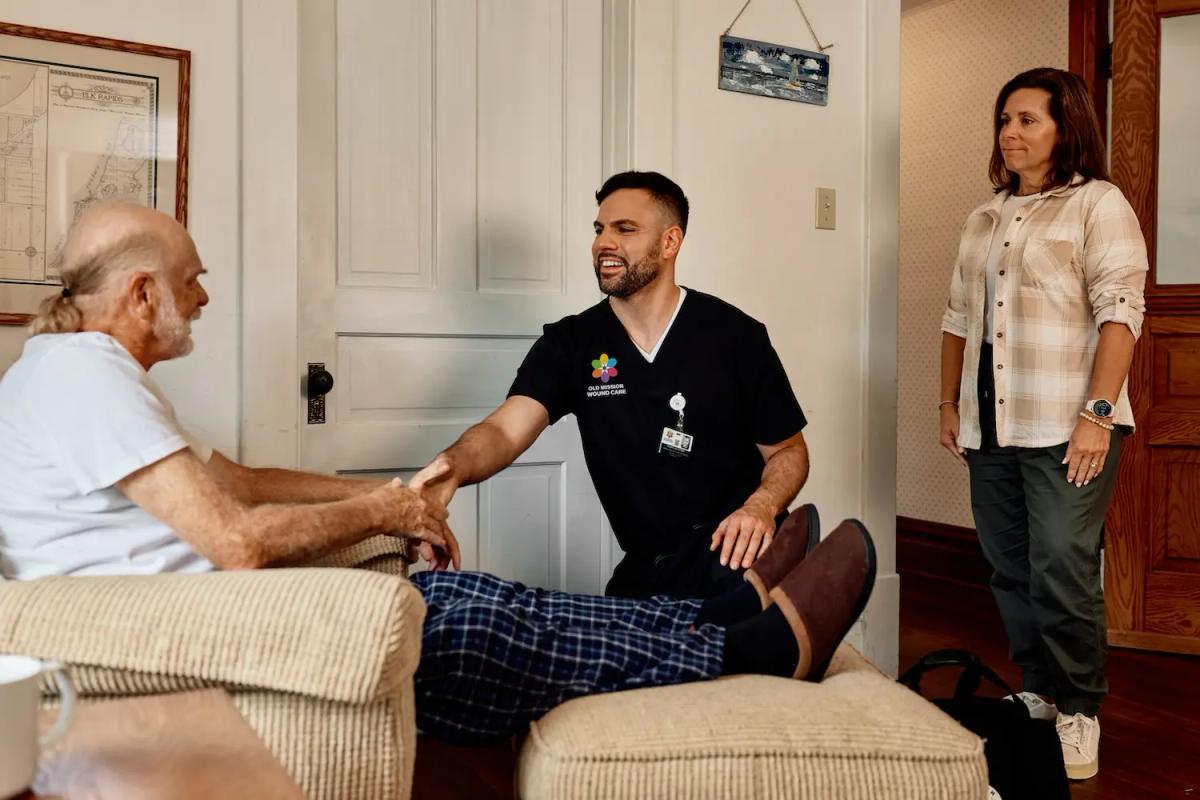
Fee-for-service wound care rewards time and volume, which quietly shifts financial and clinical risk onto home health agencies, hospitals, and payers as wounds stall and escalate into costly failures. Value-based wound care flips the incentives—forcing providers to own trajectory, downside risk, and outcomes so resolution, not repetition, becomes the economic goal.
If you're a home health agency, hospital system, accountable care organization, or health plan relying on fee-for-service wound care vendors, you're absorbing risk those providers aren't designed to manage.
The economics that kept that model viable have collapsed. The 2026 CMS Physician Fee Schedule calls for a 90% reduction in reimbursement for skin substitutes that represents a $19.6 billion cut to Medicare spending. The mobile wound care companies you relied on over the years (many of which relied on reimbursements from skin substitutes) won’t survive this.
Meanwhile, your wound care population isn't shrinking. The pathology is escalating. And you're stuck with the catastrophic tail risk when treatments stall, infections spread, and patients end up back in the emergency room.
The question isn't whether fee-for-service wound care is dying. It's whether you understand what replaces it, and why value-based care is the only model where your financial interests and clinical outcomes actually align.
In this article, we’re going to explain why fee-for-service wound care quietly transfers risk onto you, and what actually changes when incentives are rebuilt around outcomes instead of volume.
You’ll learn:
- How fee-for-service rewards time and visits, even as delayed healing amplifies clinical and financial risk
- What changes clinically after the 8–12 week threshold, and why risk starts compounding instead of stabilizing
- Who truly absorbs the downside when wounds stall, escalate, or end in readmission or amputation
- Why value-based wound care forces providers to own trajectory, escalation, and outcomes, instead of externalizing failure
How Does Fee-For-Service Wound Care Actually Work?

Time is the monetization engine in fee-for-service wound care. The longer a wound takes to heal, the more billable encounters occur. The more visits you schedule, the more revenue flows in.
This creates a structural problem: time also amplifies pathology.
When the thing that generates revenue is the same thing that increases patient risk, the system drifts toward maintenance instead of resolution. It's not malicious. It's predictable. The incentive architecture organically optimizes for continuity, not closure.
And while that happens, risk quietly escalates in the background.
What Happens Clinically When Wounds Don't Heal After 8-12 Weeks?
Early on, you're dealing with a local tissue problem. Tissue viability is recoverable. Infection is usually superficial or absent. Blood flow issues may be correctable. Escalation options are still available.
Then you cross the threshold.
Clinically, it happens around the 8-12 week mark (sometimes earlier in higher-risk patients). After that point, you're no longer managing a wound. You're managing a systemic failure cascade.
The wound stops being the problem. The patient becomes the problem.
Biofilm becomes entrenched. Inflammation becomes chronic. Local ischemia worsens. The immune response exhausts itself. Healing velocity flattens.
The risk stops increasing linearly and starts to compound.
At that point, the care setting loses control. Minor setbacks trigger ER visits. Every decision becomes reactive instead of proactive. Wounds that don't achieve 53% area reduction by 4 weeks heal in only 9% of cases by 12 weeks. Meanwhile, those exceeding this threshold heal in 58% of cases.
The system normalizes slow failure because no one is incentivized to end the story early.
Who Actually Absorbs the Risk in Fee-For-Service?
Here's what happens when the care setting loses control but the provider still gets paid per visit: accountability diffuses instead of concentrating.
No one is clearly responsible for the outcome anymore. Yet everyone is still getting paid to stay involved.
In the traditional model, risk gets externalized across multiple parties:
- The patient absorbs the biological risk
- The home health agency absorbs the financial volatility
- The payer absorbs the catastrophic tail risk
- The hospital system absorbs the failure event
The provider under fee-for-service? They absorb essentially nothing.
Medicare costs for chronic wound treatments roughly eclipsed $20 billion in 2024 (based on conservative data). The average cost of a below-knee amputation is $70,000, with therapy and prosthetics adding another $40,000. Single case wound care costs can exceed $100,000.
Meanwhile, patients miss nearly half of their wound clinic appointments. Many go 30-48 days without any wound treatment, leading to increased infection rates and readmissions.
The system fragments accountability across handoff boundaries. Care plans drift without decisive escalation protocols. Documentation becomes a proxy for outcome ownership.
How Is Value-Based Wound Care Different from Fee-For-Service?
Value-based care decouples income from wound duration and realigns it with risk management and outcomes.
Instead of getting paid per visit, the provider accepts accountability for the trajectory. If outcomes worsen, revenue suffers. If patients destabilize, that's the provider's problem to solve—not yours.
Here's what that structural shift actually changes:
- Fewer visits become better medicine. Front-loaded intensity beats prolonged management. Ending the episode early is the win, not the loss.
- The provider absorbs downside risk. They feel delay immediately. They get punished by failure—not paid through it.
- Accountability concentrates instead of diffusing. One entity owns the wound trajectory, the escalation decision, and the outcome. No excuse stack. No handoff boundaries where care plans drift.
- Risk becomes a controllable system property. The provider prices volatility instead of externalizing it. Your catastrophic tail risk becomes their operational responsibility.
When financial penalty for stagnation replaces reward for perpetuation, provider economics align with trajectory acceleration. Clinical success and financial success share identical physics.
What Does It Take for a Wound Care Provider to Actually Own Outcomes?
We built Old Mission around a simple premise: if the wound fails, the model failed.
Most providers would say the wound failed. Or the patient was noncompliant. Or the condition was too complex. That's the excuse stack.
We changed what counts as failure and who is allowed to explain it away.
Outcome accountability means rejecting the idea that volume equals success. It means accepting that fewer visits can be better medicine. Front-loaded intensity beats prolonged management. Ending the episode early is the win, not the loss.
It also means accepting downside risk as a feature, not a flaw.
Under fee-for-service, providers still get paid regardless of outcomes. For us, if outcomes worsen, revenue suffers. If patients destabilize, that's our problem to solve. We own the wound trajectory. We own the escalation decision. We own the downside.
We define failure before care starts. We price the risk instead of externalizing it. The provider absorbs variance, feels delay immediately, and gets punished by failure—not paid through it.
Can You Transition to Value-Based Wound Care Gradually?
The industry talks about "transitioning to value-based care" as if it's a gradual shift. A future goal.
We don't believe the industry transitions to a hybrid model. It simply fractures.
Hybrid sounds pragmatic. But it creates a predictable mess. You keep the incentive to prolong care, then add KPIs that punish the consequence.
It creates a blame and denial economy. Because the payment engine still runs (at least partially) on volume, stagnation gets disguised as progress.
Over time, the market splits. Outcome owners take the risk and price volatility. Activity vendors sell visits and supplies.
Why Can't Health Systems Cut Wound Care Costs and Improve Outcomes at the Same Time?
Institutional decision-makers face an impossible situation: simultaneous cost reduction and outcome improvement within vendor ecosystems designed to oppose both objectives.
What's actually available to them right now?
They can push harder on utilization controls and hope it works. Think prior authorization tightening, visit caps, documentation audits, post-hoc denials.
They can try swapping vendors for someone better.
Or they can build their own program internally. That helps them gain control, but it's operationally very heavy and hard to staff and scale.
That's why we exist.
When institutional decision-makers finally recognize this structure is working against them, the hardest thing to accept is this: a real solution requires giving up control over process in order to regain control over outcomes.
They need to stop optimizing vendors and start choosing owners.
They must accept that not all savings are immediate or linear.
And they have to admit their current controls are part of the problem.
What Actually Changes When Your Wound Care Provider Gets Paid for Outcomes?
Value-based care decouples income from wound duration and realigns it with risk management and outcomes.
When financial penalty for stagnation replaces reward for perpetuation, provider economics align with trajectory acceleration. Clinical success and financial success share identical physics.
The collision between time as revenue generator and time as pathology amplifier disappears. Resolution velocity becomes the optimization target. Concentrated ownership replaces distributed accountability.
Risk stops being an externality and becomes a controllable system property.
Fee-for-service wound care providers have their hearts in the right place. They want to heal patients. But they're constantly searching for the next patient because faster closure means less money.
The incentive of fee-for-service is wrong. Not the people. The structure. And structure determines behavior.
Share your thoughts and help others learn from your experience
Ready to Learn More?
Explore our comprehensive resource center for more insights on advanced wound care and healing.