The ROI of Prevention: Why Spending $1 on Early Wound Intervention Saves $10 Downstream
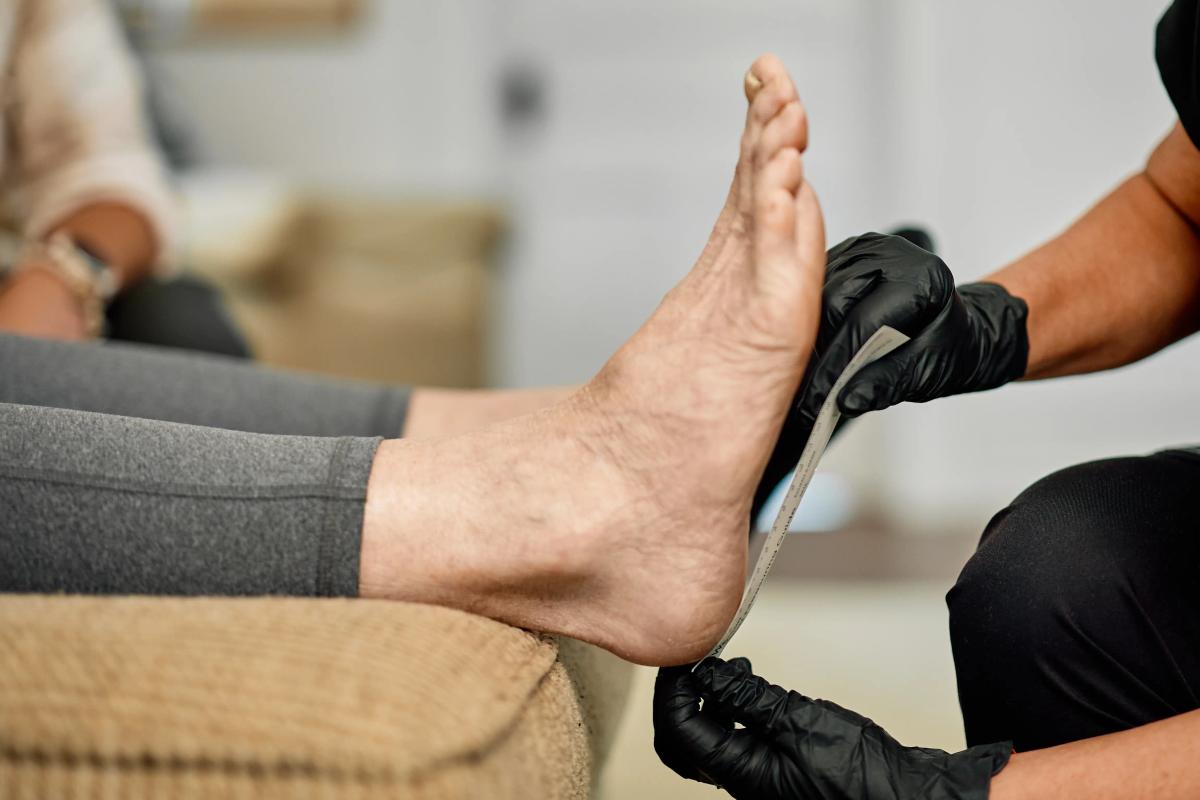
You don't need a complex financial model to understand the economics of wound care. The math is brutally simple. And it points in one direction: early intervention has a 10:1 return.
But most organizations don't act like they believe it. They still operate like prevention is a nice thing to do, not a financial imperative. So, let's make the numbers unavoidable.
The Cost Curve of Untreated Progression
A diabetic patient develops a foot ulcer. Let's walk through what happens if you let it progress without specialized early intervention:
Week 1-2: Ulcer is small, localized. The patient could see a wound care specialist for assessment. Home visit cost: $500. Assessment, debridement, education, supply plan. Problem solved if caught now.
Week 3-4: No specialist involved. The patient is trying to self-manage or seeing their PCP every 2 weeks. The wound hasn't improved. In fact, it's showing signs of mild cellulitis. Patient goes to urgent care. Cost: $200-300. Antibiotics prescribed. Patient sent home.
Week 5-6: Cellulitis is worsening. Patient has fever and pain. Goes to the ER at 11 PM. Cost: $2,500. Labs, imaging (X-rays or MRI to rule out osteomyelitis), IV antibiotics, admission decision.
Week 6-8: Patient is admitted with diabetic foot infection and suspected osteomyelitis. Hospital stay: 5 days. Cost: $15,000-$25,000. IV antibiotics, vascular surgery consult, possible debridement in OR. Infectious disease consult. Daily dressing changes.
Outcome: If caught at week 8, amputation is now likely. Surgical time, anesthesia, prosthetics, rehabilitation. Total surgical + immediate post-op cost: $70,000. First-year amputation-related cost exceeds $125,000.
Total cost of "let it progress": $142,500-$152,500.
Now reverse the scenario.
Early Intervention Model
Same patient. Same initial ulcer. But this time, your wound care strategy captures them early.
Week 1-2: Home-based wound care clinician performs first assessment. Cost: $500. Comprehensive wound evaluation, debridement, care plan, supply initiation, coordination with PCP.
Week 2-8: Weekly or bi-weekly wound care visits. Monitoring trajectory, adjusting care, coordinating vascular studies if needed. 4-6 visits at $400-500 each. Total cost: $1,800-$3,000.
Week 4: Real-time data feed shows wound is stalling despite appropriate local care. Suspicion for vascular insufficiency. Clinician escalates to vascular surgery.
Week 5: Vascular imaging ordered. Arterial occlusion identified. Revascularization candidate. Vascular surgery intervention: $8,000-$12,000.
Week 8: Wound is now healing post-revascularization. Ulcer is closing. Patient remains limb-intact.
Total cost of "early intervention and escalation": $10,300-$16,000.
Cost of saving a limb: $10K-$16K. Cost of amputation: $125K-$152K+. Ratio: 10:1 return on prevention investment.
And that's just the acute phase. Amputation's cost tail extends for decades.
The Infection Cycle: Where Prevention Pays the Biggest Return
The most expensive pivot point is infection. A controlled foot ulcer without infection can be managed outpatient indefinitely. An infected foot ulcer spirals toward amputation or sepsis within weeks.
Here's why early intervention breaks the infection cycle:
Specialized wound care clinic sees patient in week 2. Wound is contaminated but not infected. Professional debridement removes devitalized tissue, biofilm, and bacterial load. Patient is educated on off-loading and wound care hygiene. Cost: $500.
One week later, clinician returns. Wound is cleaner, smaller. No infection. Cost: $450.
If that early debridement and wound optimization hadn't happened, you're now waiting for infection to declare itself. And infection, once established in a diabetic foot, doesn't resolve with oral antibiotics. It requires hospitalization, IV therapy, possible OR debridement, and often amputation.
That single $500 office debridement prevented a $25,000 hospitalization.
Why "Wait and See" Is the Most Expensive Strategy
Here's what happens in most populations: A patient develops a wound. The referral pathway is slow or unclear. The patient doesn't go to the wound center, or they do but aren't seen for 2-3 weeks. By then, the wound has progressed. Infection may have started. Now you're not in prevention anymore. You're in rescue.
Rescue is always more expensive than prevention. Always.
The organizations that crack the code on wound management understand one thing: the first 4-8 weeks are the entire clinical window. If you haven't stabilized the wound by week 8, you're in the exponential cost zone.
Wounds that achieve 53% area reduction by week 4 heal by 12 weeks in 91% of cases. Wounds that don't achieve that threshold heal in only 9% of cases by 12 weeks. That's the threshold. That's the decision point. Miss it, and you've likely missed the amputation-prevention window.
This is why real-time escalation matters. If you're monitoring wounds weekly and you see one stalling at week 4, you have 2-4 weeks to escalate before the exponential cost curve kicks in.
The 8-12 Week Cliff
Think of wound economics as a curve with a dramatic elbow:
Weeks 1-8: Steep ROI on interventions. $1 spent on specialized assessment, debridement, and escalation prevents $5-$10 in downstream costs. Prevention is working.
Week 9-12: The curve flattens. Interventions are still possible but ROI drops. You're now managing infection, systemic complications. Cost of intervention is rising. Cost of non-intervention (amputation) is unavoidable.
Week 13+: You're in amputation territory. The cost is locked in. ROI on further intervention is minimal.
This is why velocity of assessment matters. You have 8 weeks to break the trajectory. After that, physics takes over.
The Employer Lens: Disability, Productivity, Stop-Loss Impact
If your population includes self-insured employers or employer groups, wound care economics hit even harder.
An employee developing a diabetic foot ulcer and progressing to amputation means:
- Weeks off work during hospitalization and surgical recovery: $15,000-$25,000 in lost wages (and employer productivity loss)
- Disability insurance activation: potential long-term disability claim, months or years of benefits
- Reduced return-to-work capacity: amputees often can't return to prior job (if that job requires standing, walking, or physical labor)
- Stop-loss premium impact: one catastrophic medical claim of $150K+ might trigger a 15-20% premium increase on the entire employee group
An employer investing $5,000-$10,000 in aggressive early wound management for a diabetic employee is buying out of disability risk and stop-loss exposure.
Capitation Aligns Incentives (Finally)
Here's where risk-based contracting becomes the structural solution. Under fee-for-service, both the provider and the payer have perverse incentives. The provider makes money on visits and procedures, so there's no financial driver to prevent amputation. The payer sees each claim individually, not the pattern, so they don't understand the return on prevention.
Under capitation or shared savings, the incentives flip. If you're at risk for the amputation cost, you're now obsessed with the cost curve. You want to catch wounds early. You want to escalate at the 4-week mark. You want to break the infection cycle before sepsis.
This is exactly why OMWC operates on risk-based models. We exist because prevention only works when the system that benefits from prevention is also the system that bears the cost.
The Data That Matters
Over the past 3 years, we've managed wound populations under risk-based arrangements. The data is consistent:
- Patients identified and engaged for wound care in weeks 1-2: 8% amputation rate
- Patients identified and engaged in weeks 3-4: 15% amputation rate
- Patients identified and engaged in weeks 5-6: 28% amputation rate
- Patients identified and engaged in weeks 7-8: 42% amputation rate
- Patients identified and engaged after week 8: 68% amputation rate
This isn't variation in patient population. This is variation in timing. Earlier intervention, lower amputation risk. Later intervention, exponential cost curve.
The return on early intervention isn't theoretical. It's measured.
That's why we exist. The entire economic case for specialized wound care rests on one fact: if you catch it in time, you can prevent it. But "in time" is a narrow window—8 weeks, maybe 10. Miss it, and you're not doing wound care anymore. You're managing the consequences of not having done wound care.
Every dollar spent in those first 8 weeks prevents multiples downstream. But that only works if someone is actively managing wounds in real time, with authority to escalate, and with accountability for the outcome.
Share your thoughts and help others learn from your experience
Ready to Learn More?
Explore our comprehensive resource center for more insights on advanced wound care and healing.